
Kristinehamn Art Museum – audio guides on your phone
Kristinehamn Art Museum, in a small town on the shores of Lake Vänern in west-central Sweden, opened its doors in 1997. Over the years it has shown exhibitions with greats such as Pablo Picasso, Henri Matisse and Alvar Aalto. Today the museum mainly focuses on artists from the contemporary art scene. The museum's web app has audio guides for both the permanent and the temporary exhibitions.
Challenge
Kristinehamn Art Museum wanted a stable and flexible way to give visitors access to audio guides on their own mobile phones.
As the museum has both a permanent collection and temporary exhibitions, it was important that staff could manage the audio guide content themselves, add new guides over time and update the content whenever they wanted.
To make it easy for visitors to quickly get more information about a work, the museum wanted to be able to put up QR codes in the exhibitions.
It was also important that the solution could be adapted to the museum's visual identity, that there were usage statistics, and that training and support were included.
Solution
For an indoor museum like Kristinehamn Art Museum, a web app is an excellent fit. A web app is a responsive website built on a standardised template. It works on mobile phones, tablets and in web browsers, adapting to the size of the screen.
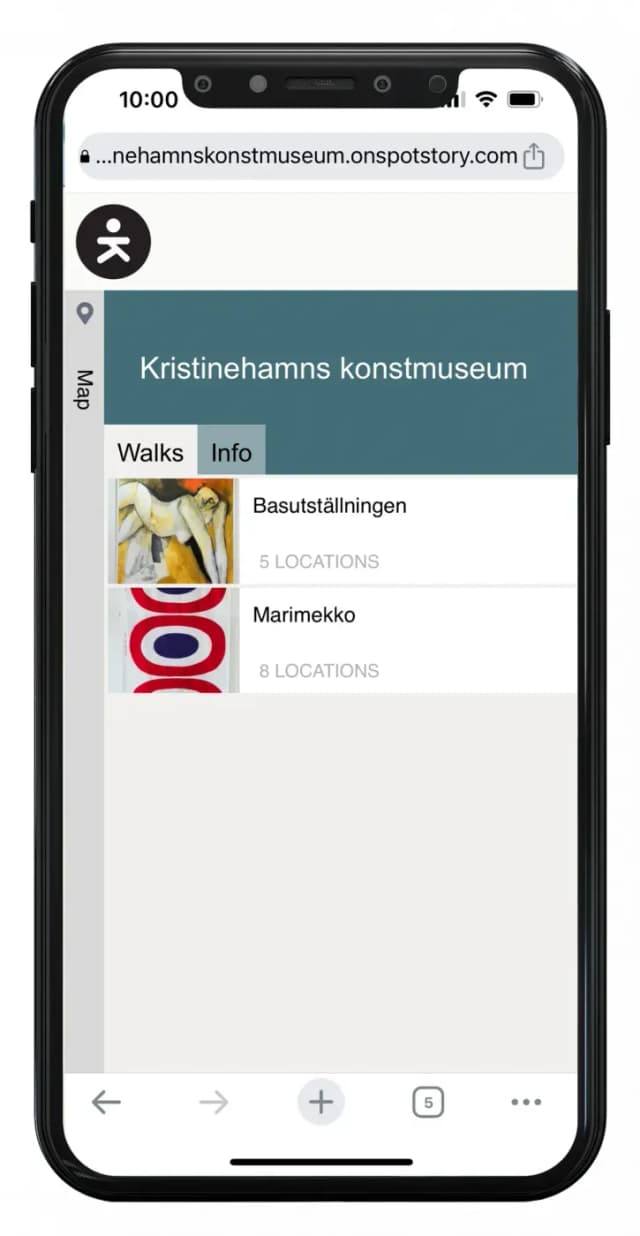
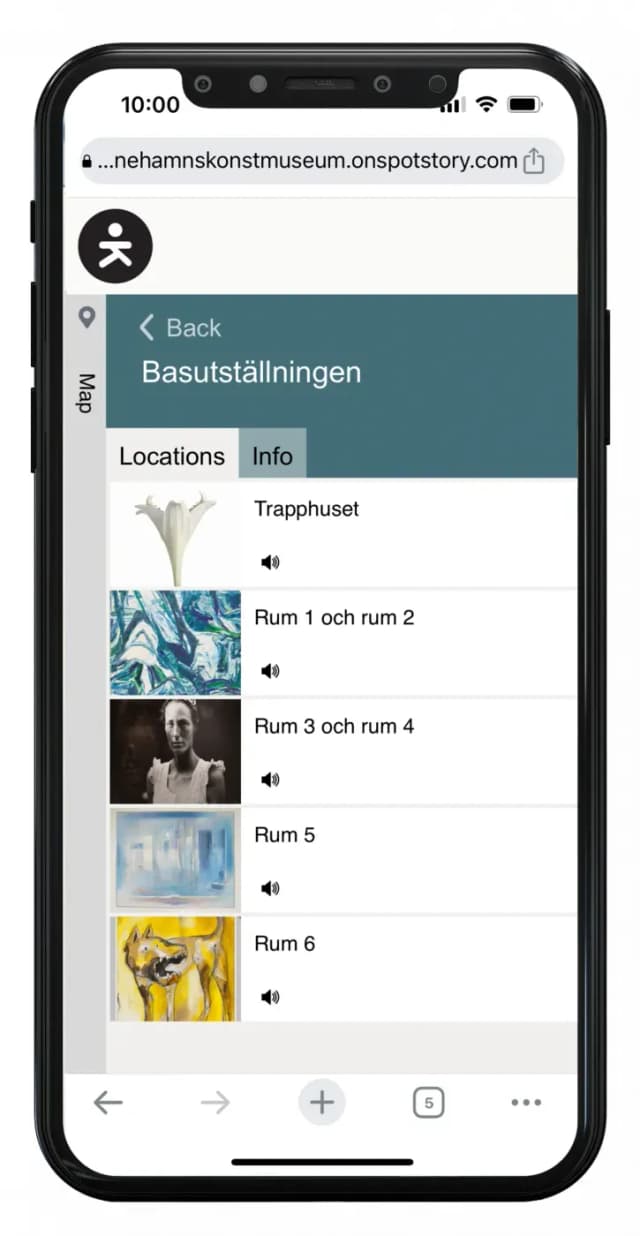
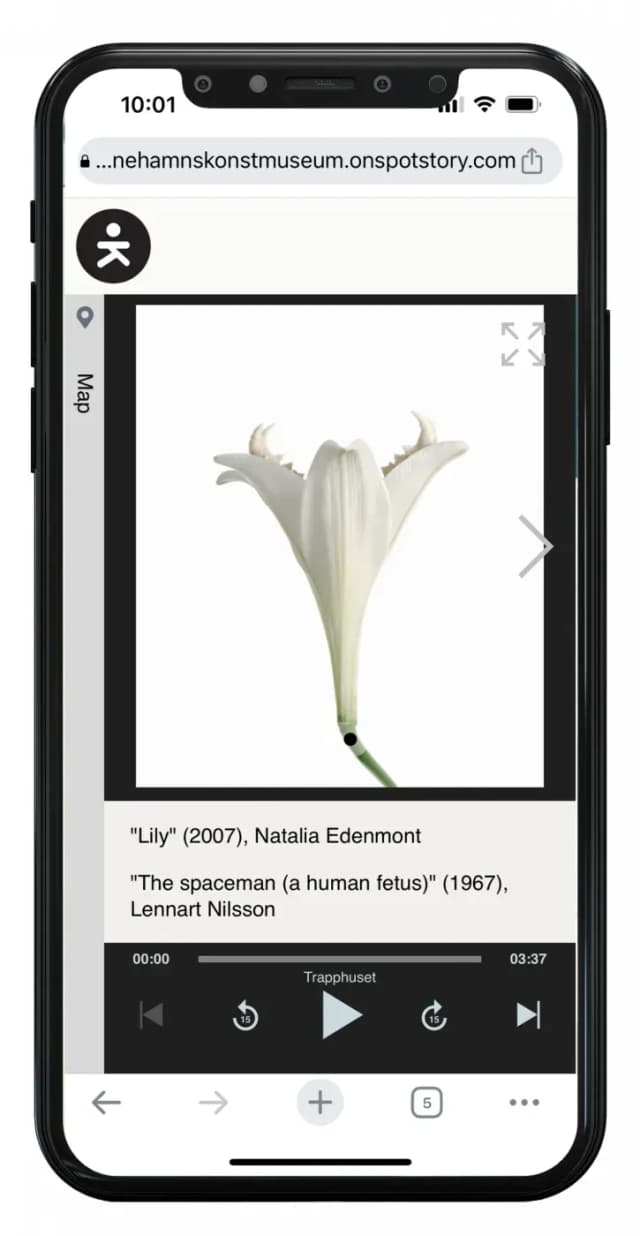
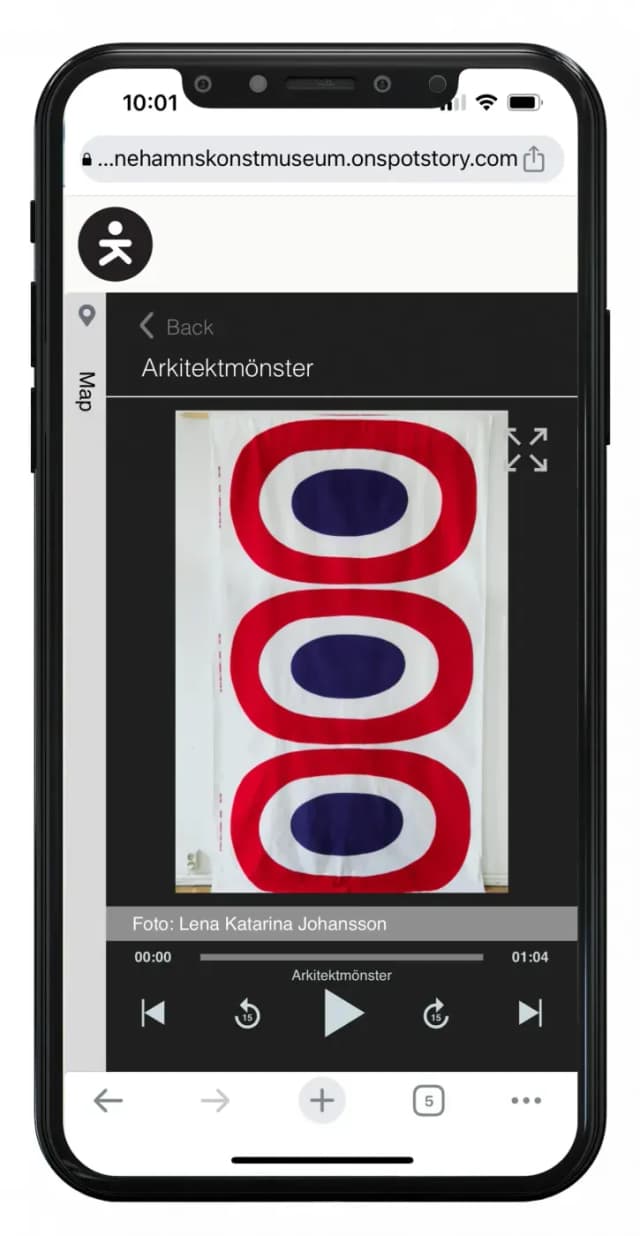
The web app's core features are guides with stops placed on a map or floor plan of the exhibition. Each stop has an image, text and audio.
A big advantage of a web app is how easy it is to create QR codes linking to specific stops in the guide. Visitors scan the QR code on the wall or a sign and go straight to the web app page with the image, text and audio for that particular work.
The content is managed in a user-friendly CMS. After an introductory training session of a couple of hours, Kristinehamn Art Museum could add all its content and keep it up to date themselves.
The accompanying statistics tool shows how the web app is used: which audio tracks are most popular, how long visitors listen and so on. We register no personal data – the statistics are about how the web app is used, not by whom.